Drone Laws in Venezuela
Verfasst von Francis Markert | Last update on 01.12.2025 | 0 Kommentare
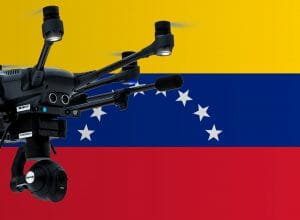
In this article, we compile the drone laws in Venezuela for you.
Venezuela classifies remotely piloted aircraft (RPA) into different categories based on their weight:
- Class 1 Mini RPA: less than 3 kilograms
- Class 2 RPA Ligeros: between 3 and 25 kilograms
- Class 3 RPA Livianos: between 25 and 150 kilograms
- Class 4 RPA Pesado: more than 150 kilograms
This classification does not differentiate between private and commercial use. For visitors to the country, Class 1 is likely the most relevant.
- Purchase, sale, manufacturing, import, and distribution of drones
- All drone flight operations
- Training and registration
Overview: Drone rules in Venezuela
Drone labels can be ordered here
Requirements for Drone Pilots in Venezuela
To operate Class 1 drones, the pilot must be at least 13 years old, possess a valid license, and have a medical certificate.
We have not yet been able to determine the exact registration and licensing process for drone pilots in Venezuela. This document at least summarizes the requirements.
According to this, drones must be registered in Venezuela. This appears to be done via this online platform. There is also a form for registration that lists additional required documents.
Safety Distances and Flight Restrictions
A distance of 9 kilometers must be maintained from airports. RPAs of Classes 1 and 2 may be operated at an altitude of up to 400 feet.
Flights are only allowed during daylight. The pilot must keep the drone within visual line of sight. If it is a Class 1 drone (weighing less than 3 kilograms), it may be flown up to 500 meters away.
A distance of 1.8 kilometers must be maintained from the President’s location, domestic and foreign authorities, facilities and companies of the basic industry (iron, steel, electricity, petrochemicals), military, police, and prison facilities.
The drone regulations for Venezuela listed here have been researched to the best of our knowledge. However, we cannot guarantee the accuracy of the information. If you want to be on the safe side, contact the Venezuelan aviation authority. Alternatively, you can inquire at the Venezuelan embassy in your home country for more information about the regulations. Please leave us a comment if you learn of any updates and/or have your own drone experience in Venezuela to share!